

Research summary
GHK-Cu has been studied in cell culture, animal wound-healing models and small cosmetic and dermatological studies. Large controlled clinical evidence is limited. This summary describes what the literature has investigated. It is not a claim about the effects of our product, which is supplied for laboratory research only.
Mechanism of action
GHK-Cu is a complex of the naturally occurring tripeptide glycyl-L-histidyl-L-lysine (GHK) with copper(II). GHK is found in human plasma and tissues, and published cell and animal work has examined its role in copper transport and its effects on extracellular matrix remodelling, collagen synthesis and gene expression in skin and other tissues.
Chemical properties
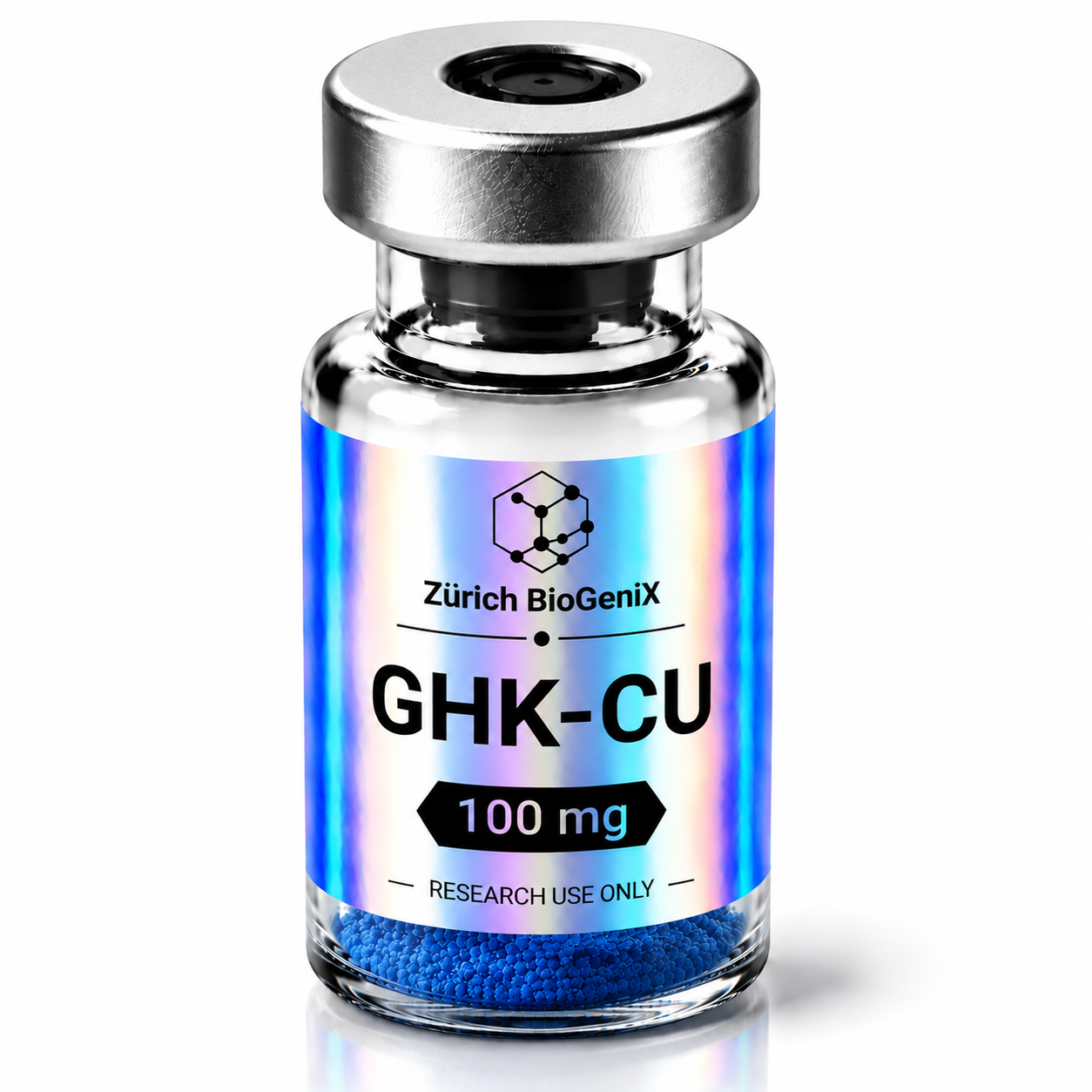
Structure: copper(II) complex of Gly-His-Lys (tripeptide). Peptide component molecular weight: approx. 340.4 g/mol. Form: lyophilised powder. Copper content, purity and identity: see the batch Certificate of Analysis.
Storage and handling
Supplied as a lyophilised (freeze-dried) powder. Store sealed, cold, dry and protected from light, as stated on the Certificate of Analysis and product label. Allow the vial to reach room temperature before opening to limit condensation. Avoid repeated temperature cycling and humidity exposure. For laboratory research use only.
Literature references
Selected PubMed records on GHK-Cu (copper tripeptide), scientific background only, not claims about our product. PMID 29986520: regenerative and protective actions of the GHK-Cu peptide in light of new gene data. PMID 35083444: the potential of GHK as an anti-aging peptide. Open any record at https://pubmed.ncbi.nlm.nih.gov/PMID/ . More: https://pubmed.ncbi.nlm.nih.gov/?term=GHK-Cu
For laboratory research use only. Not for human or veterinary use. Nothing on this page is medical advice.


