

Research summary
The epithalon literature consists mostly of in vitro studies, animal ageing studies and small clinical reports from the same laboratory network, with limited independent replication. This summary describes what the literature has investigated. It is not a claim about the effects of our product, which is supplied for laboratory research only.
Mechanism of action
Epithalon (also written epitalon) is a synthetic tetrapeptide (Ala-Glu-Asp-Gly) designed from the sequence of epithalamin, a pineal gland extract. Published cell-culture work, largely from a single research group, reported that it can induce telomerase activity and influence gene expression in cultured cells.
Chemical properties
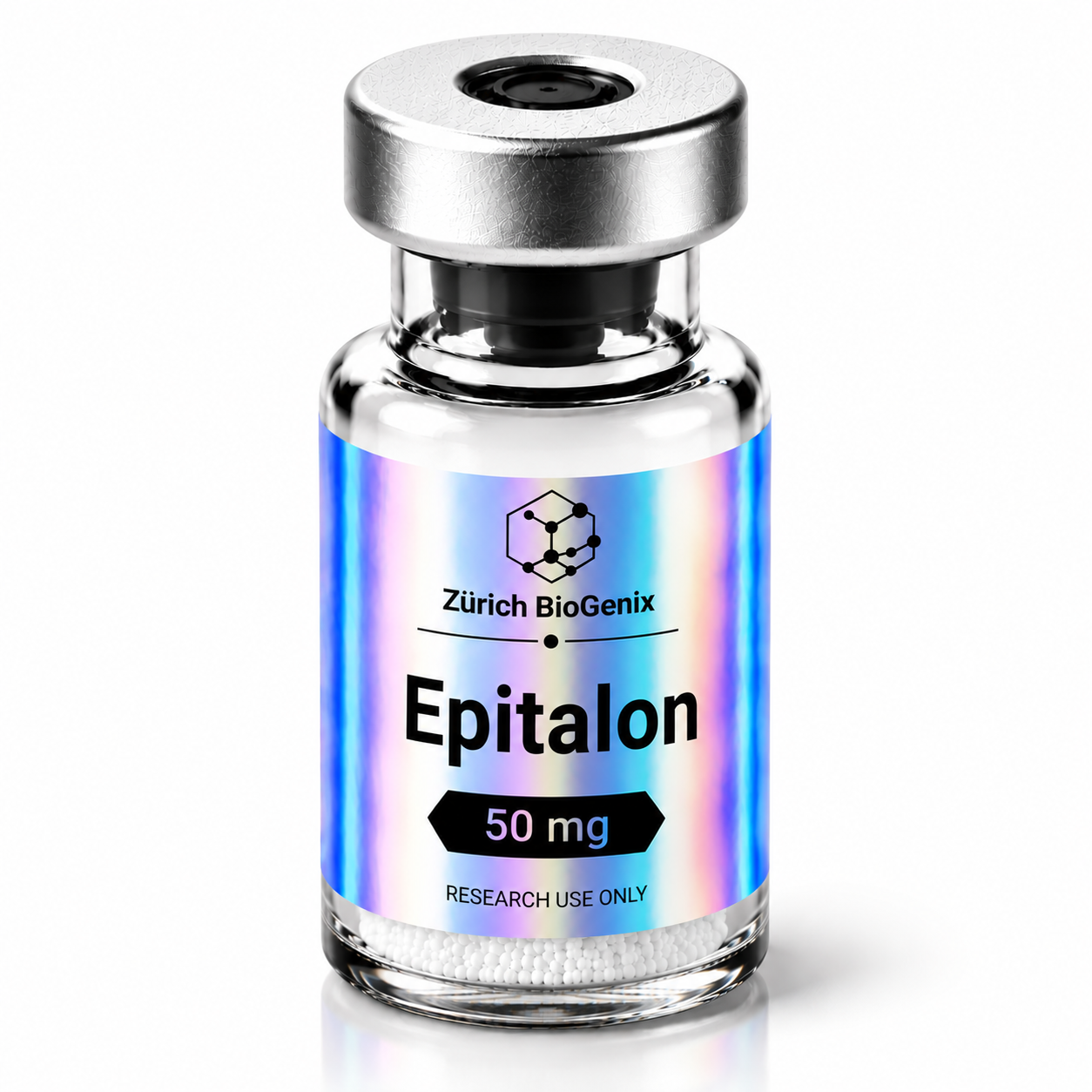
Sequence: Ala-Glu-Asp-Gly (4 residues). Molecular formula: C14H22N4O9. Molecular weight: approx. 390.3 g/mol. Form: lyophilised powder. Purity and identity: see the batch Certificate of Analysis (HPLC and mass spectrometry).
Storage and handling
Supplied as a lyophilised (freeze-dried) powder. Store sealed, cold, dry and protected from light, as stated on the Certificate of Analysis and product label. Allow the vial to reach room temperature before opening to limit condensation. Avoid repeated temperature cycling and humidity exposure. For laboratory research use only.
Literature references
Selected PubMed records on epitalon (epithalon), scientific background only, not claims about our product. PMID 40141333: overview of epitalon, a pineal tetrapeptide. PMID 40908429: epitalon and telomere length in human cell lines (in vitro). Open any record at https://pubmed.ncbi.nlm.nih.gov/PMID/ . More: https://pubmed.ncbi.nlm.nih.gov/?term=epitalon+OR+epithalon
For laboratory research use only. Not for human or veterinary use. Nothing on this page is medical advice.


