

Research summary
NAD+ biology is a large field spanning mitochondrial metabolism, DNA repair and sirtuin signalling, with research on NAD+ precursors and on direct NAD+ administration in cell and animal models. This summary describes what the literature has investigated. It is not a claim about the effects of our product, which is supplied for laboratory research only.
Mechanism of action
NAD+ (nicotinamide adenine dinucleotide) is a coenzyme, not a peptide. It acts as an electron carrier in redox reactions of cellular energy metabolism and as a substrate for NAD+-consuming enzymes, including sirtuins, PARPs and CD38. Published work has examined how NAD+ levels change with age and under metabolic stress.
Chemical properties
Class: dinucleotide coenzyme (not a peptide). Molecular formula: C21H27N7O14P2. Molecular weight: approx. 663.4 g/mol. Form: lyophilised powder. Purity and identity: see the batch Certificate of Analysis.
Storage and handling
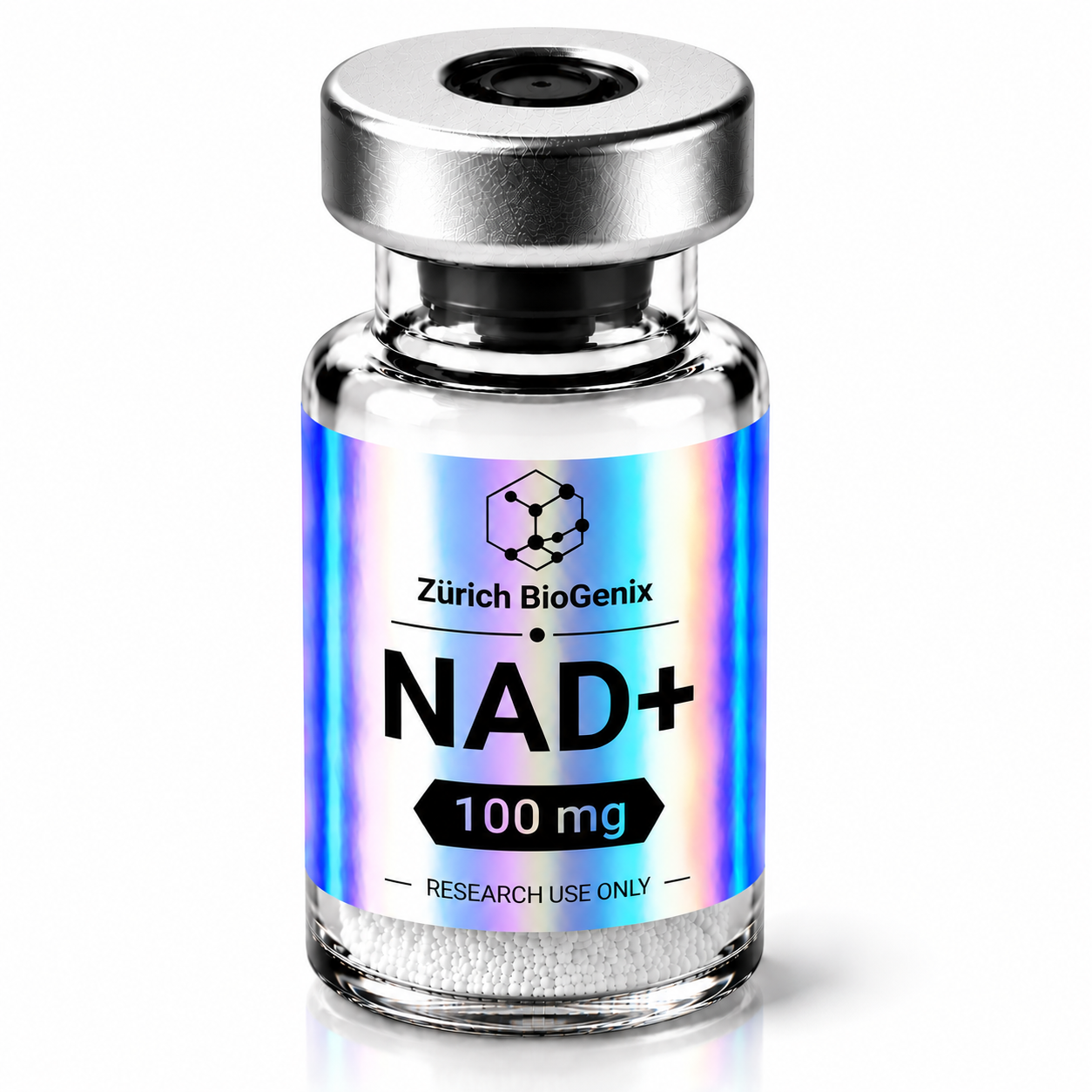
Supplied as a lyophilised (freeze-dried) powder. NAD+ is sensitive to moisture, heat and light. Store sealed, cold, dry and protected from light, as stated on the Certificate of Analysis and product label. Allow the vial to reach room temperature before opening. For laboratory research use only.
Literature references
Selected PubMed records on NAD+ biology, scientific background only, not claims about our product. PMID 33353981: NAD+ and its roles in cellular processes during ageing (review). PMID 33384409: NAD+, stemness, the immune response and cancer (review). PMID 26785480: NAD+ in aging, metabolism and neurodegeneration (review). Open any record at https://pubmed.ncbi.nlm.nih.gov/PMID/ . More: https://pubmed.ncbi.nlm.nih.gov/?term=NAD%2B+metabolism
For laboratory research use only. Not for human or veterinary use. Nothing on this page is medical advice.


