

Research summary
Research on KPV is mostly preclinical, including rodent models of intestinal inflammation and in vitro studies of epithelial and immune cells. Human data are lacking. This summary describes what the literature has investigated. It is not a claim about the effects of our product, which is supplied for laboratory research only.
Mechanism of action
KPV is the tripeptide Lys-Pro-Val, corresponding to the C-terminal fragment of alpha-melanocyte-stimulating hormone. Published cell and animal work has examined its uptake through the PepT1 transporter and its effects on inflammatory signalling, including NF-kB pathways, without engaging classical melanocortin receptor activity.
Chemical properties
Sequence: Lys-Pro-Val (3 residues). Molecular formula: C16H30N4O4. Molecular weight: approx. 342.4 g/mol. Form: lyophilised powder. Purity and identity: see the batch Certificate of Analysis (HPLC and mass spectrometry).
Storage and handling
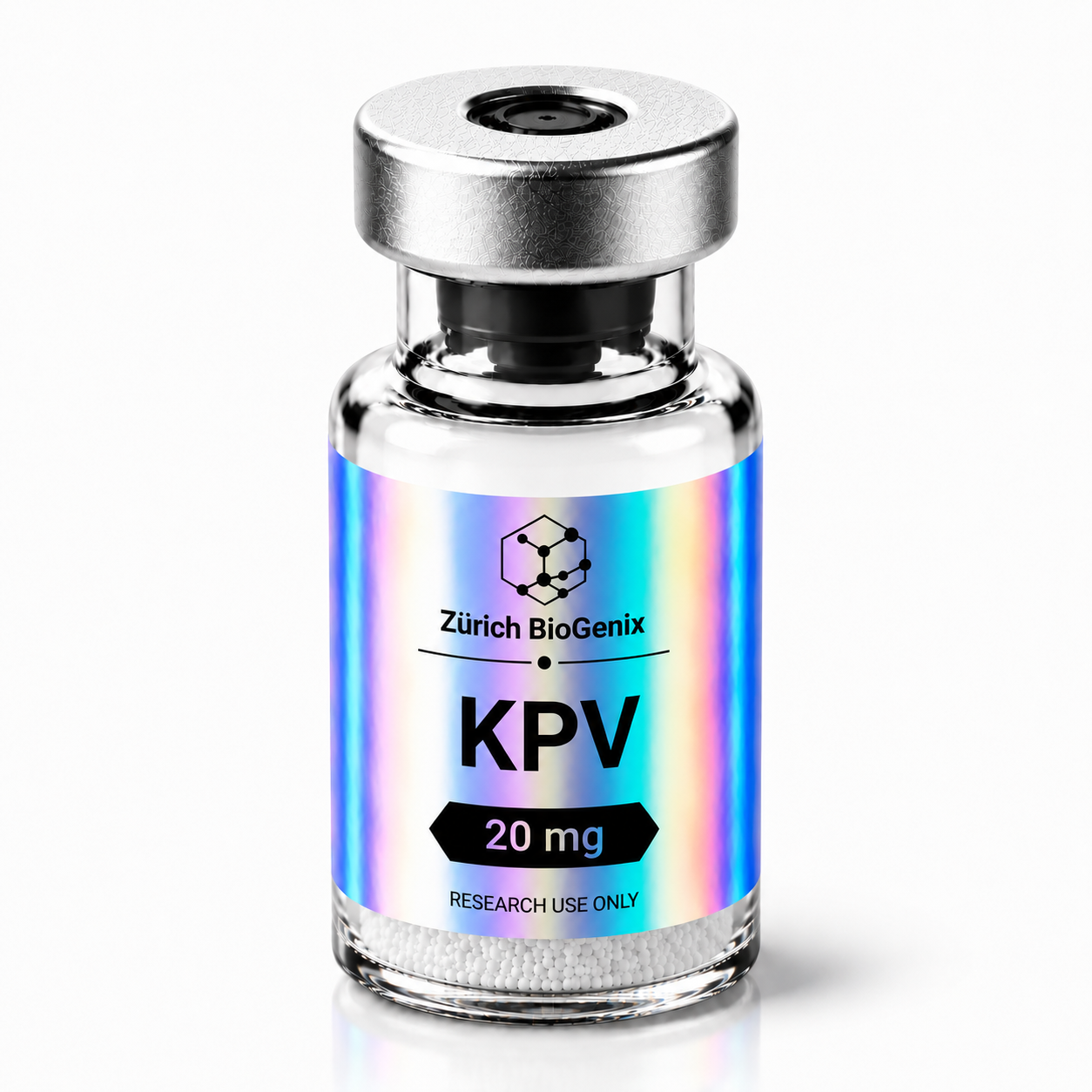
Supplied as a lyophilised (freeze-dried) powder. Store sealed, cold, dry and protected from light, as stated on the Certificate of Analysis and product label. Allow the vial to reach room temperature before opening to limit condensation. Avoid repeated temperature cycling and humidity exposure. For laboratory research use only.
Literature references
Selected PubMed records on the KPV tripeptide (alpha-MSH 11-13), scientific background only, not claims about our product. PMID 15102092: alpha-MSH 11-13 and ACTH signalling in human keratinocytes. PMID 16965771: COOH-terminal alpha-MSH 11-13 and corneal epithelial wound healing, role of nitric oxide. Open any record at https://pubmed.ncbi.nlm.nih.gov/PMID/ . More: https://pubmed.ncbi.nlm.nih.gov/?term=KPV+alpha-MSH
For laboratory research use only. Not for human or veterinary use. Nothing on this page is medical advice.


