

Research summary
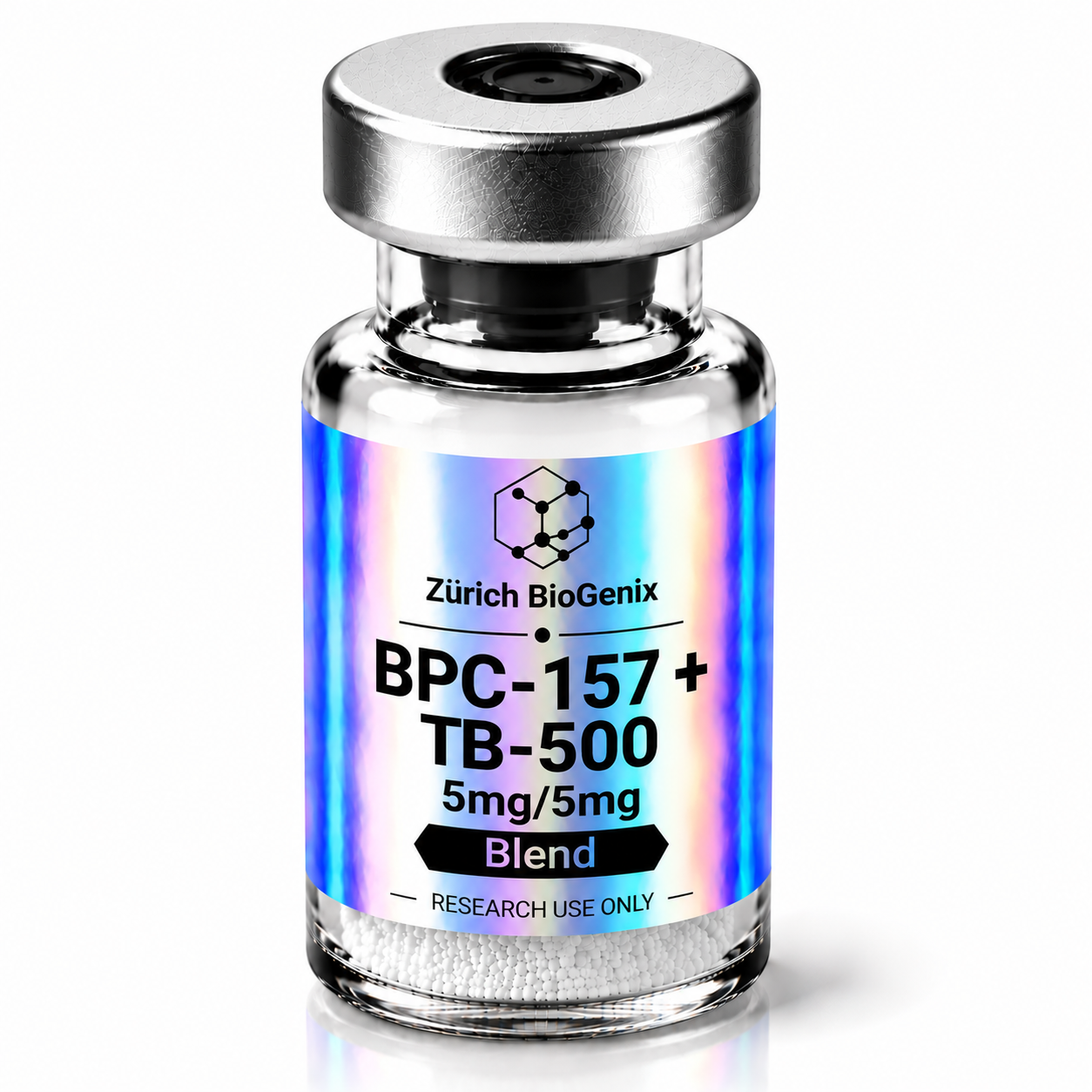
BPC-157 and thymosin beta-4 have each been studied separately in preclinical models of tendon, muscle and tissue repair, and published work on this specific combination is very limited. This summary describes what the literature has investigated. It is not a claim about the effects of our product, which is supplied for laboratory research only.
Mechanism of action
This product is a combination of two research peptides. BPC-157 is a synthetic 15-amino-acid peptide derived from a gastric protein fragment, and published preclinical work has examined its links to angiogenic and nitric oxide signalling. TB-500 is a synthetic peptide based on the actin-binding region of thymosin beta-4, a protein studied for its role in actin regulation and cell migration. Human data for both are limited.
Chemical properties
Two-component blend, 5 mg of each component. Component 1: BPC-157, sequence Gly-Glu-Pro-Pro-Pro-Gly-Lys-Pro-Ala-Asp-Asp-Ala-Gly-Leu-Val (15 residues), approx. 1419.5 g/mol. Component 2: TB-500, a synthetic peptide related to thymosin beta-4. Form: lyophilised powder. Purity, identity and content of each component: see the batch Certificate of Analysis.
Storage and handling
Supplied as a lyophilised (freeze-dried) powder blend. Store sealed, cold, dry and protected from light, as stated on the Certificate of Analysis and product label. Allow the vial to reach room temperature before opening to limit condensation. Avoid repeated temperature cycling and humidity exposure. For laboratory research use only.
Literature references
Selected PubMed records on the two components, scientific background only, not claims about our product. BPC-157: PMID 40005999 (literature and patent review) and PMID 34267654 (review, wound healing). Thymosin beta-4 (related to TB-500): PMID 38994967 (expression in human organs during development, review) and PMID 36709593 (regenerative therapy directions, review). Open any record at https://pubmed.ncbi.nlm.nih.gov/PMID/ . More: https://pubmed.ncbi.nlm.nih.gov/?term=BPC-157
For laboratory research use only. Not for human or veterinary use. Nothing on this page is medical advice.


