

Research summary
Oxytocin is one of the most extensively studied neuropeptides, with a large literature spanning reproductive physiology, neuroscience and behavioural research. This summary describes what the literature has investigated. It is not a claim about the effects of our product, which is supplied for laboratory research only.
Mechanism of action
Oxytocin is an endogenous nonapeptide hormone with a disulfide bridge between Cys1 and Cys6. It acts on the oxytocin receptor, a Gq-coupled G protein-coupled receptor found in uterine and mammary tissue and in the brain. Published work has examined its roles in reproductive physiology, social behaviour and stress regulation.
Chemical properties
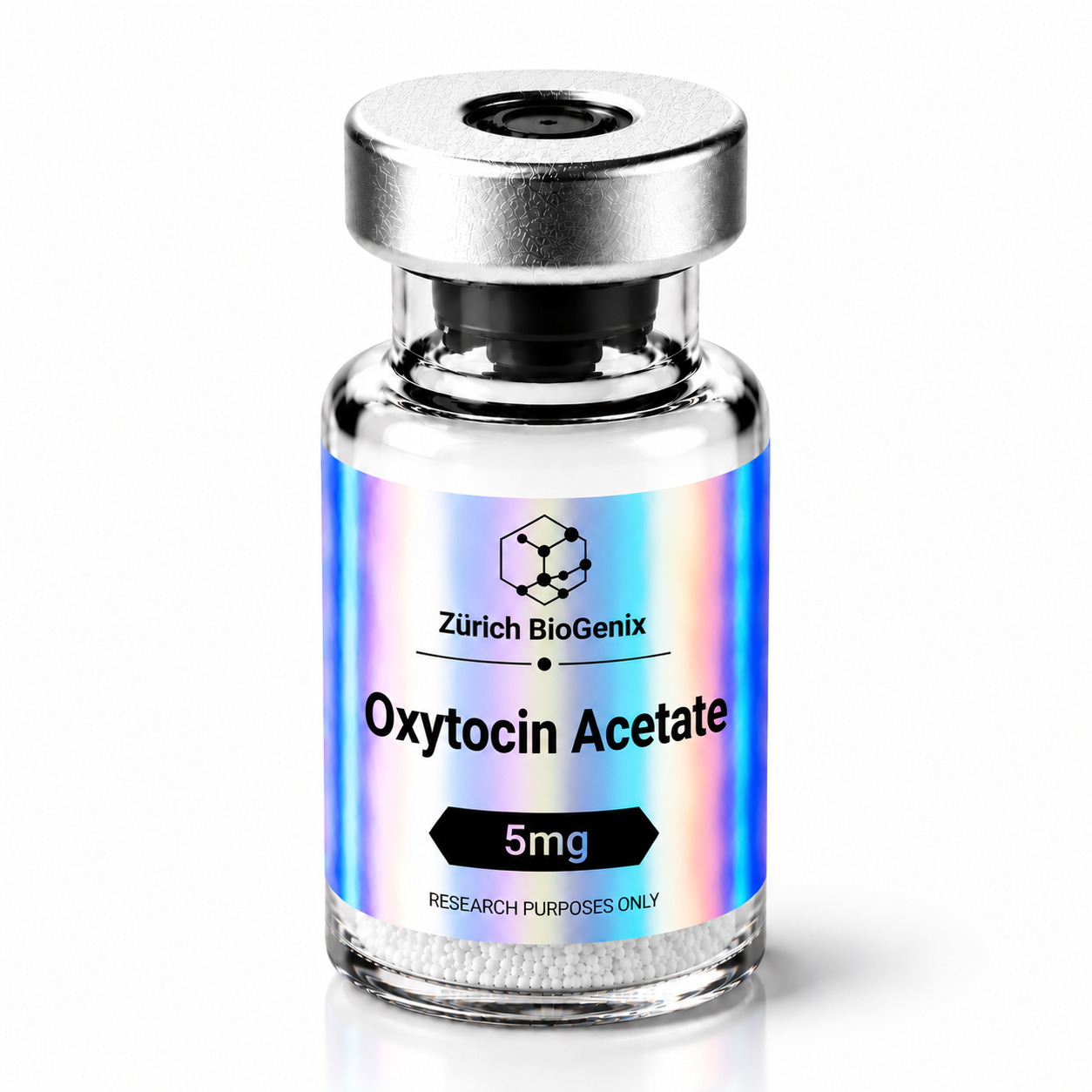
Sequence: Cys-Tyr-Ile-Gln-Asn-Cys-Pro-Leu-Gly-NH2 (9 residues, disulfide bond Cys1-Cys6, C-terminal amide). Molecular weight (free base): approx. 1007 g/mol. Supplied as the acetate salt. Form: lyophilised powder. Purity and identity: see the batch Certificate of Analysis.
Storage and handling
Supplied as a lyophilised (freeze-dried) powder. Store sealed, cold, dry and protected from light, as stated on the Certificate of Analysis and product label. Allow the vial to reach room temperature before opening to limit condensation. Avoid repeated temperature cycling and humidity exposure. For laboratory research use only.
Literature references
Selected PubMed records on oxytocin, scientific background only, not claims about our product. PMID 33823654: oxytocin, neural plasticity and social behavior (review). PMID 38462255: physiology and pharmacology of oxytocin in labor and the peripartum period (review). Open any record at https://pubmed.ncbi.nlm.nih.gov/PMID/ . More: https://pubmed.ncbi.nlm.nih.gov/?term=oxytocin
For laboratory research use only. Not for human or veterinary use. Nothing on this page is medical advice.


