

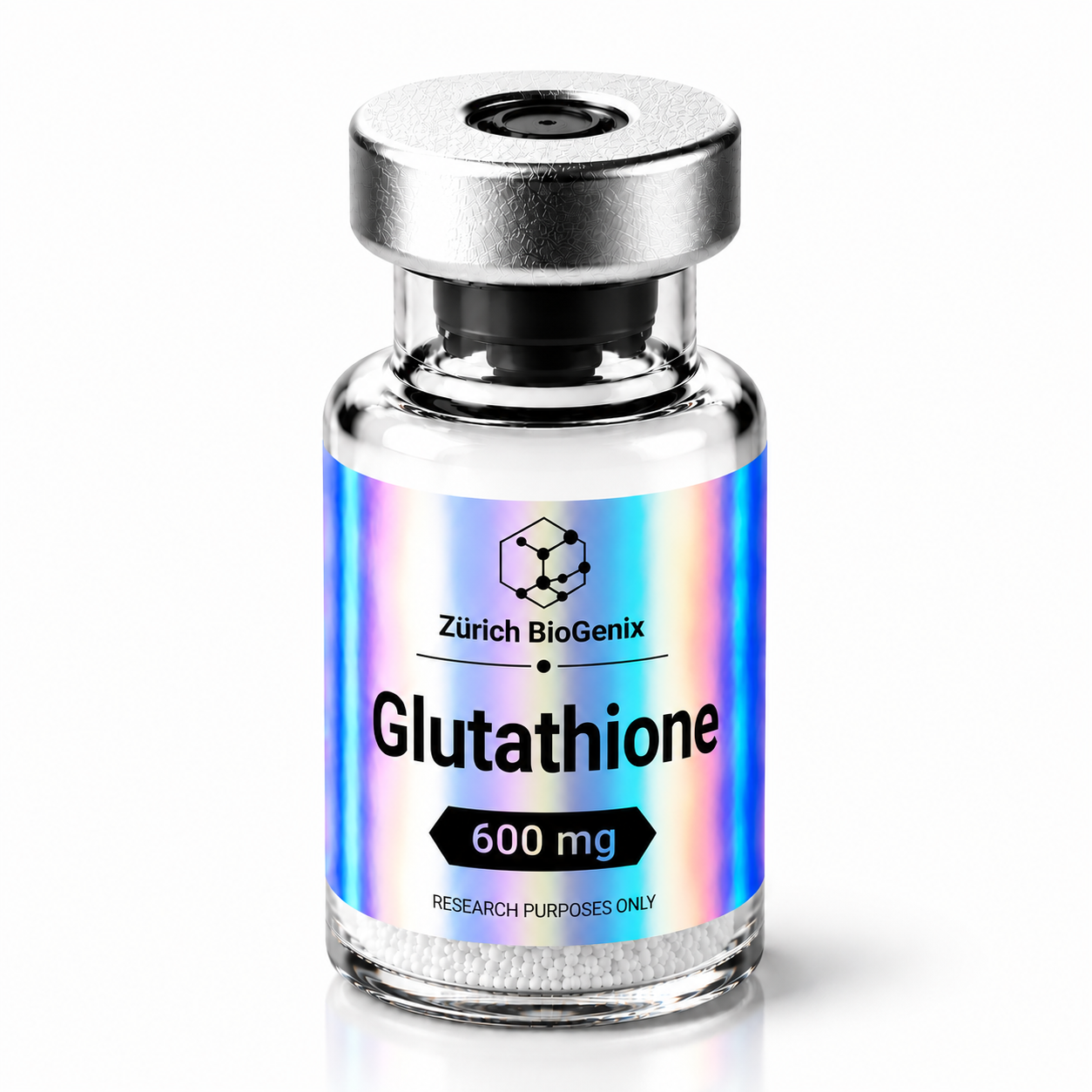
Research summary
Glutathione metabolism is widely studied in cell biology, toxicology and ageing research, including the ratio of reduced to oxidised glutathione as a marker of oxidative stress. This summary describes what the literature has investigated. It is not a claim about the effects of our product, which is supplied for laboratory research only.
Mechanism of action
Glutathione is an endogenous tripeptide (gamma-glutamyl-cysteinyl-glycine) and the main low-molecular-weight thiol in most cells. Its cysteine thiol group lets it act as a redox buffer, as a cofactor for glutathione peroxidases and glutathione S-transferases, and in the conjugation and removal of electrophilic compounds.
Chemical properties
Structure: gamma-L-Glutamyl-L-cysteinylglycine (tripeptide). Molecular formula: C10H17N3O6S. Molecular weight: approx. 307.3 g/mol. Form: powder. Purity and identity: see the batch Certificate of Analysis.
Storage and handling
Store sealed, cold, dry and protected from light, as stated on the Certificate of Analysis and product label. Glutathione is sensitive to oxidation, so keep the container tightly closed and minimise exposure to air and humidity. Allow it to reach room temperature before opening. For laboratory research use only.
Literature references
Selected PubMed record on glutathione, scientific background only, not claims about our product. PMID 37921175: an update on glutathione biosynthesis, metabolism, functions and medicinal purposes (review). Open any record at https://pubmed.ncbi.nlm.nih.gov/PMID/ . More: https://pubmed.ncbi.nlm.nih.gov/?term=glutathione+metabolism+antioxidant
For laboratory research use only. Not for human or veterinary use. Nothing on this page is medical advice.


